§ Free tool
SaaS MVP cost calculator.
This SaaS MVP planner helps founders scope a first version that can launch. Choose the features you have in mind, mark each as a must-have or later, and it shows how much sooner the must-have version launches than building everything at once.
01 - Always in the MVP
02 - Everything else: now, later or never?
03 - Your MVP vs everything
Focused MVP
6 weeks
Must-haves only (6 features).
Everything at once
12 weeks
6 more weeks before a single user signs up.
These are general timelines and prices based on typical projects, not a quote. For an exact timeline, quote and pricing, book a free consultation.
Focused MVP 6 weeks, everything at once 12 weeks.
Scope your MVP with us
We'll pressure-test the list and give a fixed price. Your plan is filled in.
Keep this result
Share a link with your team, or get the full report by email.
Why the must-have list matters
Most MVPs miss their launch date because they try to build version 1.0 instead of version 0.1. The planner shows the gap between the two in weeks, which usually makes the case for cutting scope on its own.
A good must-have list answers one question: what is the least a user needs to get the core value once? Everything else can wait until real users ask for it.
What every SaaS MVP needs
Sign-in, the one core feature, simple billing and a basic admin view are usually enough to validate a SaaS idea. Teams, roles, integrations, a mobile app and advanced analytics are common later additions.
The timeline starts from a typical focused MVP and adds each feature's usual share of the work. A written scope turns it into a fixed timeline and price.
A worked example
Say you are planning a booking tool for clinics. The base covers sign-in, the core booking feature, simple billing and a basic admin view. Mark guided onboarding and email notifications as must-haves, and teams, integrations, an analytics dashboard and AI features as later. The planner shows about 6 weeks for the focused version and about 12 for everything at once.
That is six extra weeks before a single clinic has taken a booking. Launching the 6-week version first lets real users tell you which later features they actually need. Often one or two of them turn out not to matter at all, and the time goes into something users asked for instead.
Signs your MVP scope is too big
Watch for must-haves that serve the business rather than the user. Detailed analytics, a public API, multiple languages or an audit log are rarely what makes a first customer stay. Another sign is building for several user types at once: if the product needs teams, roles and permissions on day one, check whether one type of user could prove the idea first.
A mobile app alongside the web app is the biggest single jump in the planner, adding around four weeks on its own. A responsive web app works well on phones for most early users, and a native app can follow once you know people come back to the product often enough to want one on their home screen.
How we can help
Wyrelane Solutions is an experienced team that builds and fixes this for clients in the US, UK, Europe and Australia, at fixed prices with weekly demos:
- SaaS MVP & Product Development MVP development company for SaaS startups: a focused first version in about 5 to 8 weeks, then billing, onboarding and analytics as you grow.
- Custom Web Application Development Custom web development and web application development on React and Next.js: client portals, dashboards, auth and billing, from MVP to production.
Frequently asked questions
How long does a SaaS MVP take to build?
A focused SaaS MVP with sign-in, one core feature and billing typically takes about 5 to 8 weeks. Each extra feature adds time; the planner shows how much.
What should an MVP include?
Only what a user needs to get the core value once: usually sign-in, the main feature, billing and a basic admin view.
What is the difference between an MVP and a prototype?
A prototype shows how the product would work, often as clickable designs, and nobody signs up to it. An MVP is a real, working first version that users sign up for and ideally pay for. A prototype tests the idea with a few people; an MVP tests whether the business works.
How do I decide which features to build first?
Start from the one job a user comes to the product for, and keep only the features needed to finish that job once. Rank the rest by how often early users ask for them. The planner helps by showing how many weeks each later feature adds, so you can weigh it against launching sooner.
Should I use no-code for my MVP?
No-code can work for testing demand, but it often limits you once real users arrive. A lean custom build costs more at first and avoids a rebuild later.
Who owns the code?
You do, from day one: the codebase, domain, hosting and accounts are all in your name.
Further reading
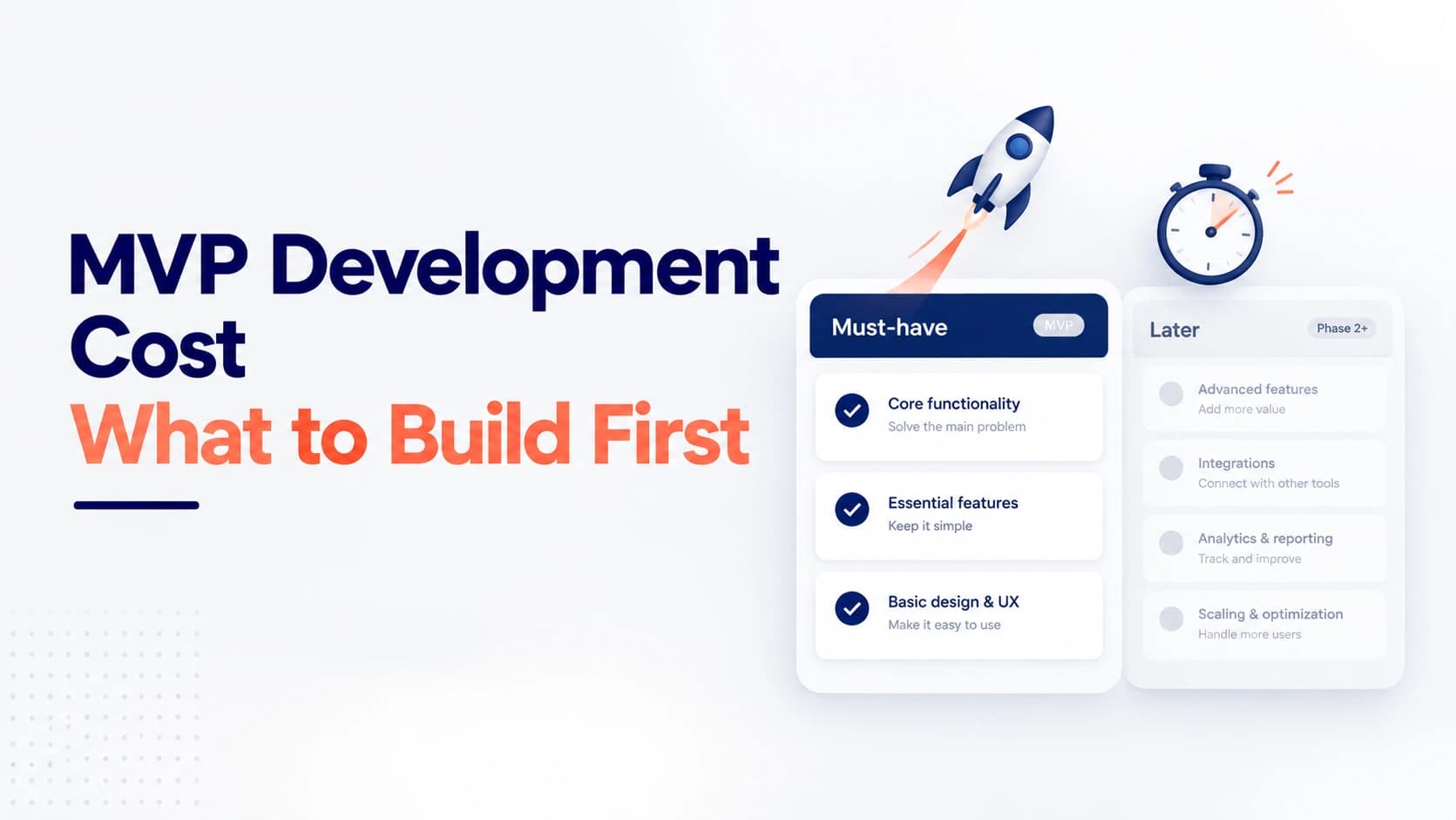
MVP Development Cost in 2026: What to Budget and What to Cut
What an MVP really costs to build in 2026, what pushes the price up, and a worked example where moving four features to later saves $3,000 and six weeks.
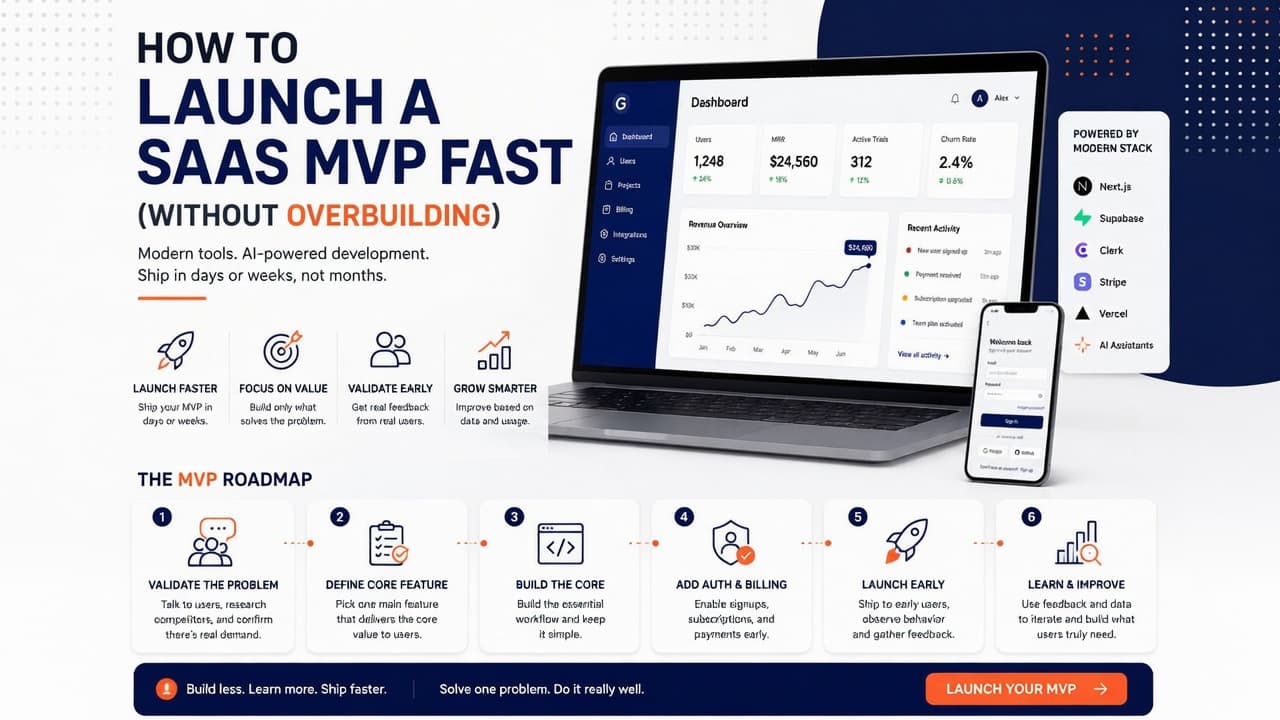
How to Create an MVP for a SaaS Startup (Fast, Without Overbuilding)
A step-by-step guide to creating an MVP for a SaaS startup: what to build, what to leave out, how long it takes, who should build it, and how to grow from MVP to SaaS.
SaaS Development Checklist for Non-Technical Founders (2026)
A phase-by-phase SaaS development checklist for non-technical founders: what to prepare, who to hire, what to check during the build and before launch.