AI Product Recommendations: Are They Actually Worth It?
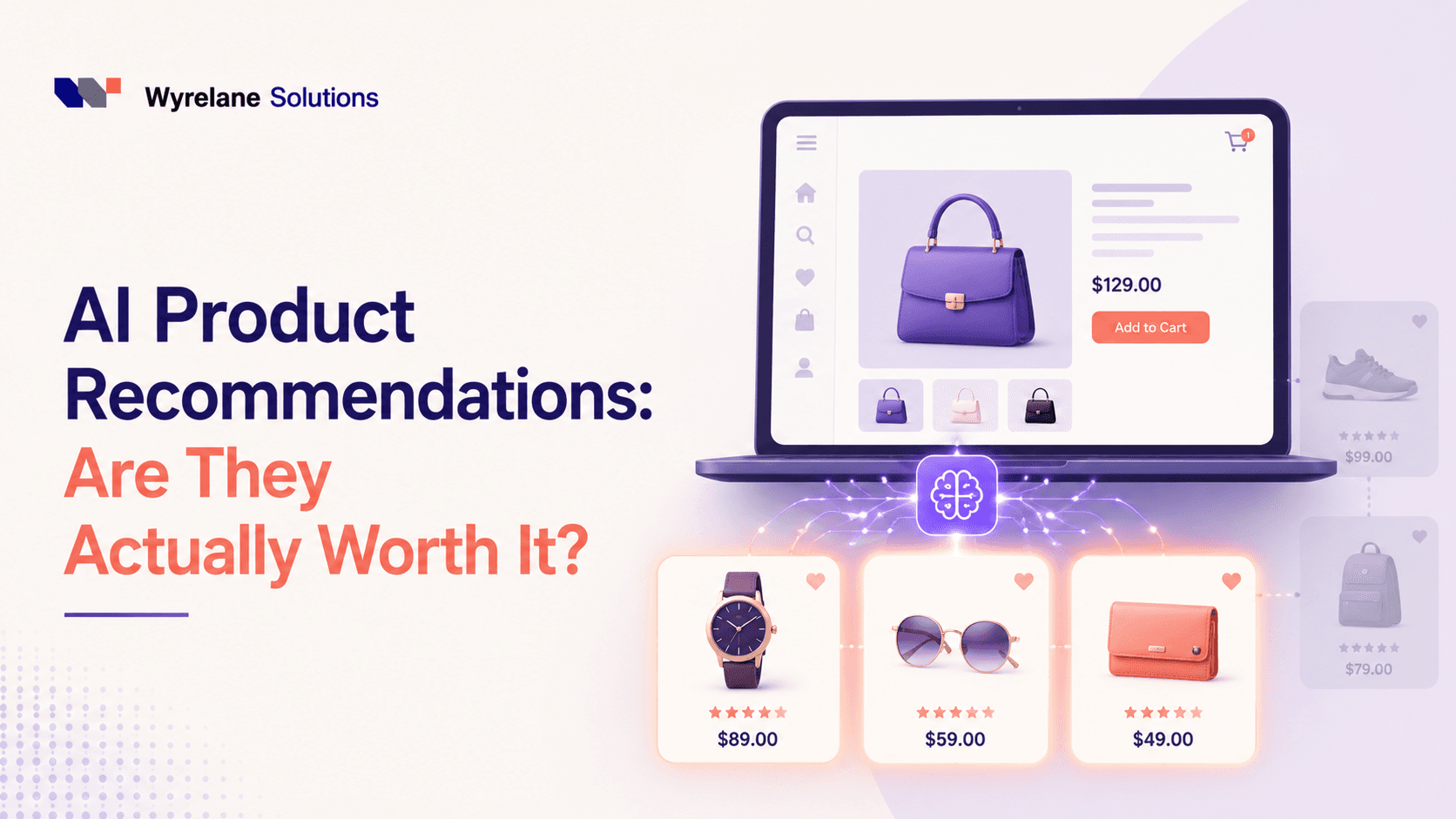
Your best salesperson never says "customers also bought." They notice the shopper is holding a size 10 trail shoe, ask where they run, and hand over the socks that stop blisters. AI product recommendations are an attempt to do that on every product page, for every visitor, at once.
So are they worth paying for? The short answer: yes for stores with a few hundred products and steady traffic, usually not yet for a small catalog with a handful of orders a week. In between, it depends on your product data more than on the tool you pick. There's also a second question hiding inside this one, which more store owners are now asking: will AI tools like ChatGPT and Google's AI Mode recommend my products? We'll cover both.
What AI Product Recommendations Actually Are
The old version was simple counting. If many people who bought a tent also bought a camping stove, show the stove to anyone looking at the tent. It needs no knowledge of the individual shopper, which is why nearly every store platform has offered it for years.
Product recommendation using AI goes further. Instead of one rule for everyone, the system weighs what this particular visitor is doing: what they've viewed in this session, what's in their cart, what they bought before, what they searched for, and which products other people with a similar pattern ended up choosing. Newer systems also read the product itself (the title, description, attributes and images) so they can suggest a genuinely similar item even when nobody has bought the two together yet.
That last part matters more than it sounds. Counting-based suggestions only work once a product has sales history. AI-driven product recommendations can place a new arrival next to the right products on day one, as long as the product information is good.
Where AI Recommendations Pay Off
Recommendations earn their keep in four places, and they aren't equally valuable for every store.
Bigger orders. The clearest win is the add-on that genuinely belongs with what's in the cart: the case for the phone, the filter for the coffee machine, the matching pillowcase. When the suggestion is obviously useful, it doesn't feel like an upsell. When it's random, shoppers learn to ignore the whole section.
Finding things in a big catalog. Most visitors see a tiny slice of what you sell, usually whatever sits at the top of a category page. In a catalog of a few thousand products, recommendations are often the only way a shopper ever meets the item that suits them best.
Returning visitors and email. "Here's something related to what you looked at last week" gets far more attention than "here's this week's sale." Recommendation blocks in emails and on a returning visitor's home page are where personalization is most visible.
Fewer near-identical choices. If you sell forty variations of the same thing, a short, relevant shortlist helps a shopper decide instead of leaving to think about it.
When They're Not Worth It Yet
Here's where we'd hold off, and where we'd tell a store owner to keep their money for now.
A small catalog. With thirty or forty products, you can hand-pick "goes well with" items for every product in an afternoon. Your judgment will beat an algorithm that has very little to learn from, and it costs nothing.
Low traffic. Personalization learns from behavior. A store with a few dozen visitors a day doesn't generate enough of it, so the "AI" suggestions stay generic for months. Spend on getting traffic first.
Messy product data. If titles are inconsistent, half the products have no category and descriptions are copied from the supplier, the recommendations will be as muddled as the catalog. Cleaning up the data usually does more for sales than the recommendation engine itself, and you need it for the next section anyway.
A slow store. Recommendation apps add scripts to every product page. If your pages are already slow on phones, adding another widget can cost more in lost visitors than it earns in add-ons. Check your speed before you add anything.
What AI Product Recommendations Cost
There are three routes, and the price gap between them is large.
Built into your platform. Shopify's free Search & Discovery app lets you show related products automatically and set your own complementary products by hand. Most modern themes display them without extra work. For many stores this is the right place to start, because it's free and fast.
A third-party app. Dedicated recommendation apps add proper personalization, email recommendations and testing tools. They're usually a monthly subscription priced by your traffic, orders or revenue, so compare what you'd pay at your size today and at twice your size.
A custom build. For large or unusual catalogs (made-to-order products, B2B pricing, bundles with rules, or recommendations that need data from your own systems), a custom recommendation engine is the way to go. That's part of our custom AI tools work, which starts from $4,999. It only makes sense when off-the-shelf apps can't see the data that actually drives your customers' choices.
Whichever route you choose, budget a little time every month. A setup that made sense in spring can be recommending last season's stock by autumn, and nobody notices until that section's clicks quietly drop.
Will AI Recommend My Products? The Other Kind of AI Recommendation
This is the question more store owners are asking now, and it's a different one. Shoppers increasingly ask ChatGPT, Google's AI Mode, Perplexity or Copilot "what's the best waterproof jacket under $200?" and get a short list of products back. Getting onto that list has nothing to do with the widget on your product page. It depends on whether those AI tools can find and understand your products.
What's known so far about how they choose:
ChatGPT says its product results are chosen independently and aren't ads. It draws on public product pages it can read and on product feeds that merchants share with OpenAI.
Google's AI Mode pulls products from Google's Shopping Graph, which is built from Google Merchant Center feeds and the product structured data on your pages.
Shopify stores are shared with AI shopping channels through Shopify Catalog by default. You can check which channels have access, and switch them on or off, from the sales channels area of your Shopify admin.
Notice what all three have in common: they read your product data. Nobody can promise you a spot in an AI answer, but you can make sure nothing stops you being considered. Here's the checklist we use:
Titles that say what the product is. "Men's waterproof hiking jacket, packable" beats "The Summit."
Descriptions that answer buyers' questions. Materials, sizes, who it's for and who it isn't for. AI tools answer detailed questions, so they need detailed answers to work from.
Complete product structured data. Price, currency, availability, brand, and a SKU or GTIN (barcode) on every product page.
A product feed in Google Merchant Center, kept in sync with your real prices and stock.
Reviews on product pages, plus clear shipping and returns policies.
Pages AI tools can read. Product details should be in the page itself, not hidden behind tabs that only load when someone clicks.
You can check the structured data part in about a minute. Our free Shopify store audit looks at a live product page and tells you whether it carries the price, stock, brand, product identifiers and review ratings that Google reads, with a fix for anything missing. The same clean data feeds your on-site recommendations too, so that one job pays off twice. For the full step-by-step, read how to show up in ChatGPT and Google AI shopping.
How to Tell Whether Recommendations Are Working
Don't judge a recommendation engine by how clever it sounds in the sales demo. Judge it by three numbers in your own store:
Click rate on each recommendation block. If almost nobody clicks a section, it's in the wrong place or showing the wrong things.
Average order value for orders that included a recommended product, compared with those that didn't.
Revenue from recommended products each month, against what the app or build costs you.
If your app supports it, run a simple test: show recommendations to half your visitors for a few weeks and compare. It's the only way to know whether the add-ons were extra sales or would have happened anyway.
So, Are AI Product Recommendations Worth It?
For a store with a few hundred products or more, steady traffic and decent product data: yes. Start with what your platform gives you free, move to a paid app when you can measure the difference, and consider a custom build only when your catalog has rules that apps can't follow.
For a small store: not yet. Hand-pick your "goes well with" products, fix your product data and put the effort into getting found, including by AI shopping tools. That groundwork is what makes recommendations worth paying for later.
Frequently Asked Questions
Do AI product recommendations really increase sales? They can, mainly through bigger orders and helping shoppers find products in large catalogs. The lift depends on your traffic, catalog size and product data, so measure it in your own store rather than relying on a vendor's average.
How much traffic does a store need before AI recommendations are worth it? There's no fixed number, but personalization needs enough visits and orders to learn from. If you get a few dozen visitors a day, hand-picked related products will usually do as well for free.
How do I get ChatGPT or Google to recommend my products? No one can guarantee it, but you can make your products easy to understand: clear titles, detailed descriptions, complete product structured data, an up-to-date Google Merchant Center feed, and reviews. Shopify stores are shared with AI shopping channels through Shopify Catalog by default.
Can AI recommendations feel pushy to customers? Yes, when they're poorly tuned, for example suggesting the product someone just bought. Suggestions that plainly fit what the shopper is looking at feel helpful; the rest gets ignored.
Do I still need good product descriptions if I use AI recommendations? More than ever. Recommendation engines and AI shopping assistants both read your product data, so weak titles and copied descriptions limit what either can do for you.
Keep reading
How AI Is Changing Ecommerce in 2026: What's Real, What's Hype
Will AI Recommend My Products? How to Show Up in ChatGPT and Google AI Shopping
How to Add AI Product Recommendations to Your Shopify or WooCommerce Store
Want Recommendations That Fit Your Catalog?
We set up product recommendations and clean product data through our Shopify development and custom AI tools services. For a real example, see the HomeMart appliance store case study.
Our experienced team will tell you honestly whether your store is ready for AI recommendations, or whether a cleaner catalog will earn you more first.
Tell us about your store, and we'll recommend the right next step for it.
More posts
All posts →
How to Add AI Product Recommendations to Your Shopify or WooCommerce Store
A step-by-step guide to product recommendations on Shopify and WooCommerce: the free built-in options, when an app is worth it, where to place them and a 30-day rollout plan.
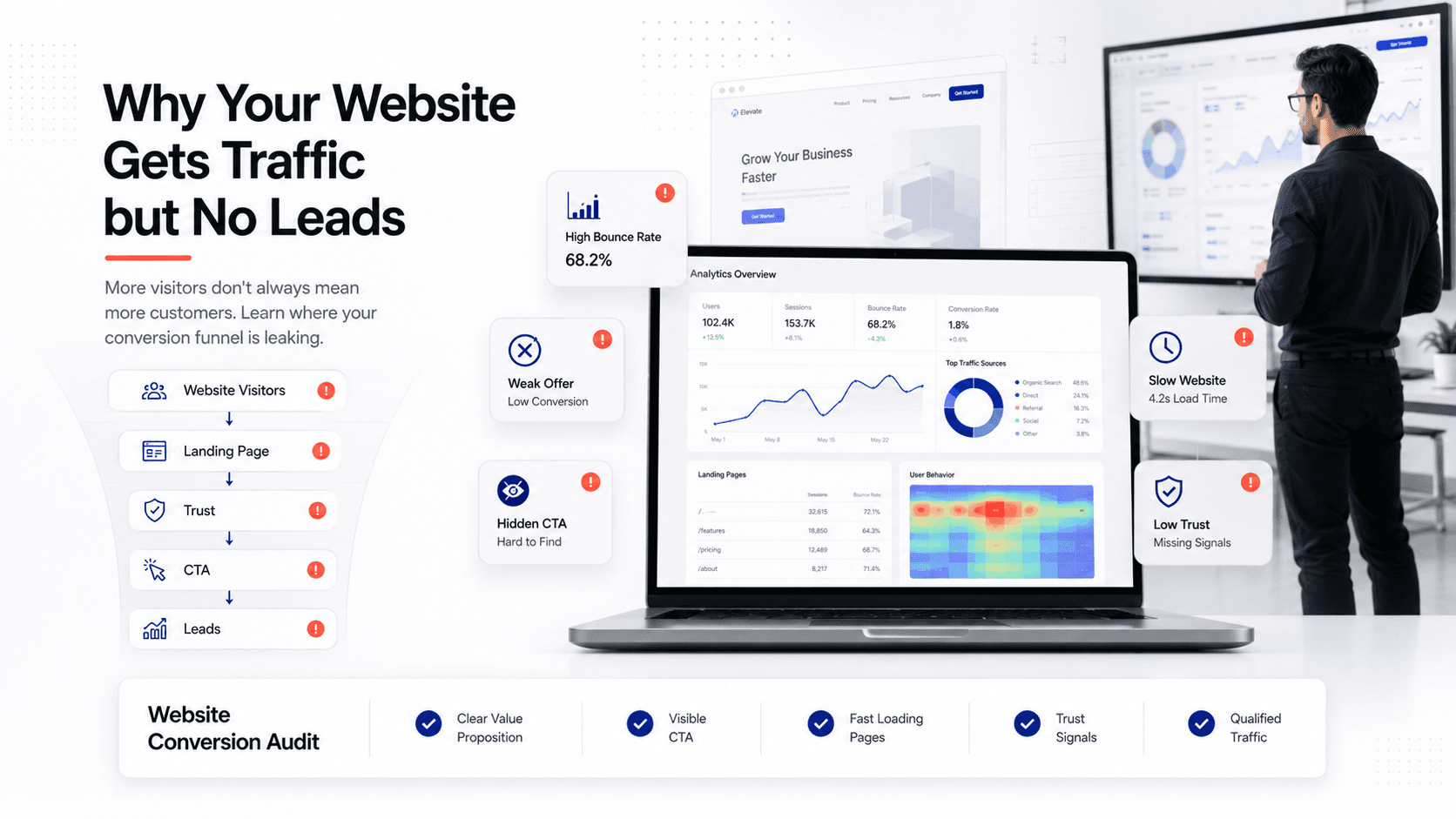
Website Traffic but No Leads? 7 Reasons and How to Fix Them
Visitors arrive, the inbox stays quiet. Here are the seven real reasons traffic doesn't turn into enquiries, an afternoon checklist to find yours, and the fix order.

8 Website Redesign Mistakes That Kill Conversions (and How to Avoid Them)
Lost pages, missing 301 redirects, broken tracking and untested forms: the website redesign mistakes that make a new site do worse, plus launch checklists.