
How AI Is Changing Ecommerce in 2026
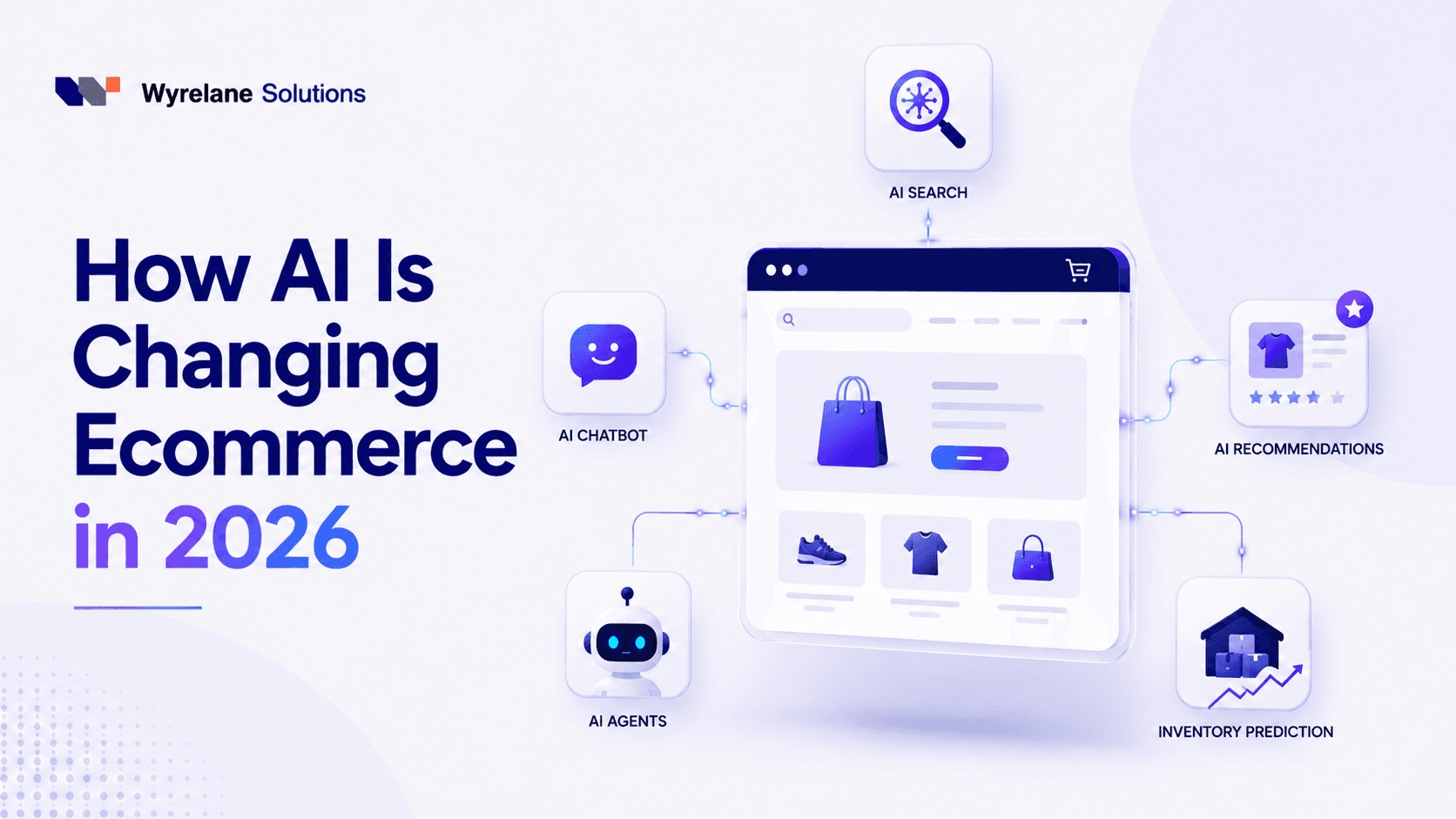
How AI Is Changing Ecommerce in 2026
Five years ago, "AI in ecommerce" mostly meant a recommendation widget at the bottom of a product page suggesting things you'd already bought. It was useful, occasionally, and nobody mistook it for anything transformative.
That framing doesn't really hold anymore. In 2026, AI isn't a feature bolted onto the ecommerce experience; it's increasingly the layer customers interact with before they even reach a product page, and often the layer making decisions on their behalf once they're there. Search behavior has shifted. Support has shifted. Even the idea of who, or what, actually does the shopping has started to shift.
For businesses that have been quietly putting off "the AI thing," the gap between what customers now expect and what a lot of stores still deliver is getting harder to ignore. Here's what's actually changed, not the hype version, the practical one.
AI Search Has Quietly Rewritten How People Find Products
For most of ecommerce's history, product search meant typing a few keywords into a box and hoping the results matched what you actually meant. Anyone who's searched "waterproof jacket not too heavy" on a typical store's search bar knows how badly that usually goes.
AI-powered search understands intent, not just keywords. A shopper can describe what they want in plain language, "something for a rainy hike that packs down small," and get results that actually reflect that description, rather than a literal keyword match that missed the point entirely. This matters more than it sounds like it should, because search is often the single highest-intent moment in the entire shopping journey. Someone using a search bar has already decided to buy something; a bad search experience is one of the fastest ways to lose a sale that was, technically, already won.
Beyond the store's own search bar, there's a second, bigger shift happening: a growing share of product discovery now starts outside the store entirely, inside AI assistants and AI-powered search engines that summarize and recommend products directly. Being findable and accurately described in a way these systems can parse has become its own kind of visibility problem, sitting alongside traditional SEO rather than replacing it.
AI Chatbots Have Moved Well Past "How Can I Help You Today?"
Chatbots earned a bad reputation for years, mostly because early versions were rigid, keyword-matching systems that broke the moment a customer phrased something slightly unexpectedly. That reputation is increasingly out of date.
Modern AI chatbots understand natural language, hold context across a conversation, and can actually do things like check order status, walk someone through sizing, compare two products against each other, apply a valid discount code, and initiate a return. They're not scripted flowcharts anymore; they're closer to a knowledgeable staff member who happens to be available at any hour, in any time zone, without a queue.
The businesses getting real value from this aren't necessarily automating everything. They're automating the repetitive, high-volume conversations, the questions that come up dozens of times a day, while making sure a real person is one step away the moment a conversation gets complicated or emotionally loaded. That balance is what separates a chatbot that feels helpful from one that feels like a wall between the customer and an actual answer.
AI Recommendations Have Gotten Genuinely Personal
"Customers who bought this also bought" was the standard for a long time, and it worked reasonably well as a blunt instrument. What's changed is the resolution. Modern recommendation systems draw on browsing behavior, purchase history, real-time context, and even the specifics of what someone's currently looking at to suggest products that actually make sense for that individual shopper, not just for people who share a broad purchase pattern.
The effect shows up quietly but consistently with higher average order value, better conversion on product pages, and a shopping experience that feels considered rather than generic. Done well, it doesn't feel like being sold to. It feels like the store actually noticed what you were looking for, which is a genuinely different experience from a static "bestsellers" list.
AI Customer Support Has Become the Default Expectation, Not a Bonus
This is one of the more significant shifts, and it's easy to underestimate because it happened gradually. Customers no longer expect to wait until "business hours" for an answer about an order, a return, or a product question. If a competitor answers instantly and a business doesn't, that gap is felt immediately, even if nobody explicitly complains about it.
AI-powered support now routinely handles the bulk of first-contact questions, order status, return eligibility, sizing, and shipping timelines instantly and around the clock, escalating to a human the moment something falls outside its confidence or the conversation clearly needs empathy a bot shouldn't be faking. Businesses that have implemented this well aren't cutting support staff; they're redirecting that staff's time toward the complex, high-value conversations that actually benefit from a human being involved, while the repetitive volume gets absorbed automatically.
Inventory Prediction Has Gotten Considerably Smarter
This one happens entirely behind the scenes, but its impact on the bottom line is arguably larger than any customer-facing AI feature on this list. Traditional inventory planning relied heavily on historical sales data and a fair amount of educated guesswork, reasonable but blind to a lot of the signals that actually drive demand shifts.
AI-driven inventory prediction factors in a much wider range of inputs, including seasonal trends, real-time browsing and cart behavior, external factors like weather or regional events, and marketing campaign timing to forecast demand with meaningfully more precision. The practical result is fewer stockouts on items that are about to spike, less capital tied up in overstocked items that aren't moving, and a supply chain that reacts to actual demand signals instead of last quarter's average. For businesses running tight margins, this is often where AI delivers the most measurable financial impact, even though it's the least visible part of the whole shift.
AI Agents Are the Part Actually Changing the Shape of Ecommerce
This is the newest and, honestly, the most disruptive shift on this list. AI agents go a step beyond chatbots and recommendation engines; instead of just answering questions or suggesting products, they can actually take multi-step actions on someone's behalf. Comparing prices across multiple retailers, tracking a wishlist item and purchasing automatically once it hits a target price, handling an entire return-and-reorder process without a human touching a single screen.
This cuts both ways for businesses. On one hand, AI agents acting on behalf of customers increasingly need to interact with a store's systems directly; clean product data, reliable APIs, and accurate structured information aren't just nice-to-haves anymore; they're becoming a prerequisite for being usable by an agent at all. On the other hand, businesses are also starting to deploy their own AI agents internally, handling repricing decisions, managing supplier communication, automatically adjusting marketing spend based on real-time performance, and running tasks that used to require a person manually checking a dashboard multiple times a day.
The businesses paying attention right now aren't necessarily the ones building the flashiest agent-powered feature. They're the ones making sure their systems are structured cleanly enough that both customer-facing and internal AI agents can actually work with them effectively, which turns out to be more of a data and infrastructure question than a flashy AI feature question.
What This Actually Means for Businesses Still Catching Up
None of this requires overhauling an entire ecommerce operation overnight, and trying to adopt all six of these at once is a fast way to end up with six half-finished projects instead of one that works well. The businesses navigating this well tend to follow a similar pattern: pick the area causing the most obvious pain right now, usually customer support volume or inventory guesswork, get AI working well there, measure the actual impact, and then move to the next one.
What's risky isn't moving slowly. It's assuming this shift is still optional. The gap between a store offering instant, intelligent support and personalized discovery, and one still running a static search bar and a generic FAQ page, is becoming a genuinely noticeable difference in customer experience, and increasingly, in whether AI shopping agents can even engage with a store properly in the first place.
Frequently Asked Questions
Is AI in e-commerce still mostly hype, or is it delivering real results? At this point, it's delivering measurable results in several areas, particularly AI-powered customer support, personalized recommendations, and inventory forecasting, where the impact on cost and conversion is concrete and trackable, not speculative.
What's the difference between an AI chatbot and an AI agent in e-commerce? A chatbot primarily answers questions and holds a conversation. An AI agent goes further, taking multi-step actions on someone's behalf, comparing products, completing a purchase, managing a return, without a human manually executing each step.
Do small e-commerce businesses need AI agents, or is this only relevant for large retailers? While large retailers are moving fastest, the underlying tools, AI chatbots, recommendation engines, and predictive inventory are increasingly accessible to smaller businesses too. The starting point that matters most is picking the single biggest pain point, not adopting everything at once.
How does AI search affect ecommerce SEO? It adds a new layer to it. Traditional SEO still matters, but AI-powered search and shopping assistants increasingly summarize and recommend products directly, which means structured, accurate product data is becoming as important as ranking well in a traditional search results page.
Final Thoughts
AI in e-commerce stopped being a differentiator sometime in the last couple of years and started becoming closer to table stakes. Search, support, recommendations, inventory planning, and now increasingly the shopping process itself, are all being reshaped by systems that understand context and take action, not just systems that display information.
The businesses that come out ahead over the next few years won't necessarily be the ones with the most AI features. They'll be the ones who picked the areas where AI genuinely solves a real problem, implemented it properly, and kept a human in the loop exactly where one still matters.
Ready to Bring AI Into Your Ecommerce Operation?
Whether you're looking to automate customer support, build smarter product recommendations, improve inventory forecasting, or get your systems ready for AI agents to interact with, our AI Automation team can help you identify where it'll actually move the needle for your business, not just where it looks impressive.
Talk to us about where AI could have the biggest impact on your store, and let's build it properly.
More posts
All posts →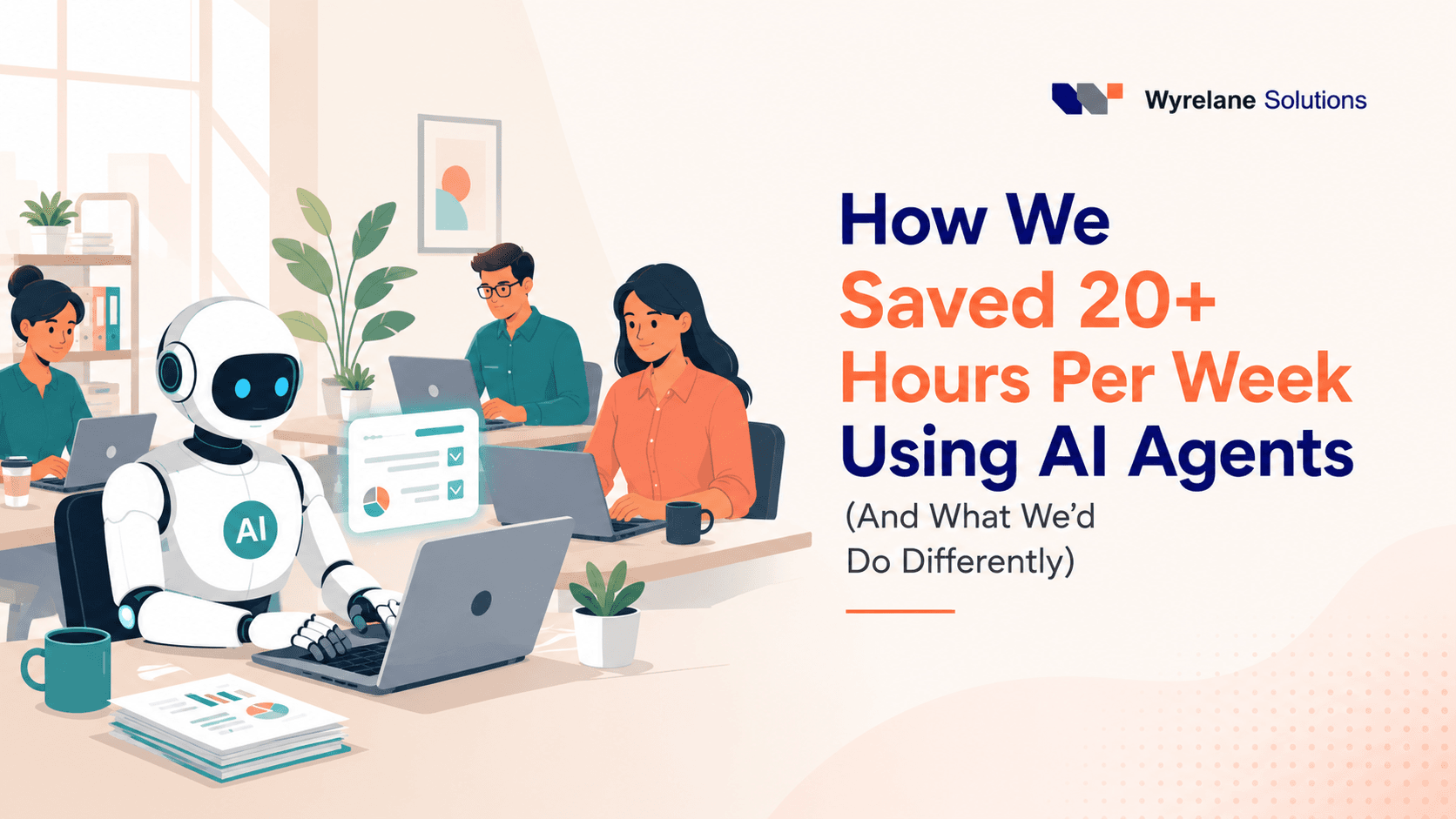
How We Saved 20+ Hours Per Week Using AI Agents (And What We'd Do Differently)
We didn't set out to "transform our workflow with AI." We just wanted to stop drowning in busywork. Here's exactly how our small team clawed back over 20 hours a week using AI agents, including the mistakes we made along the way.
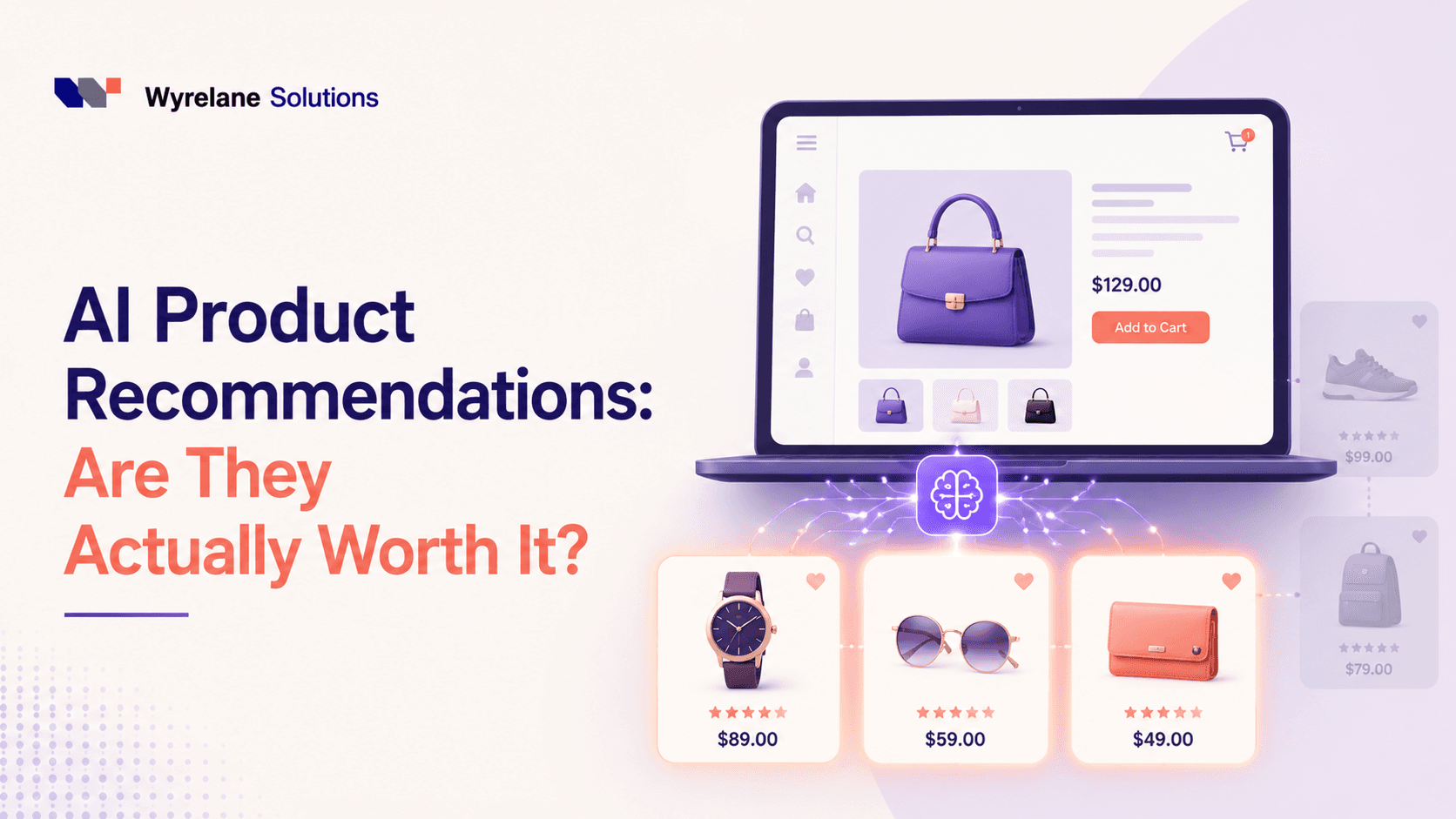
AI Product Recommendations: Are They Actually Worth It?
Customers who bought this also bought" used to be as good as personalization got. AI recommendation engines promise something smarter, but they're not free, they're not instant, and they don't work well on every store. Here's an honest look at what they actually deliver.
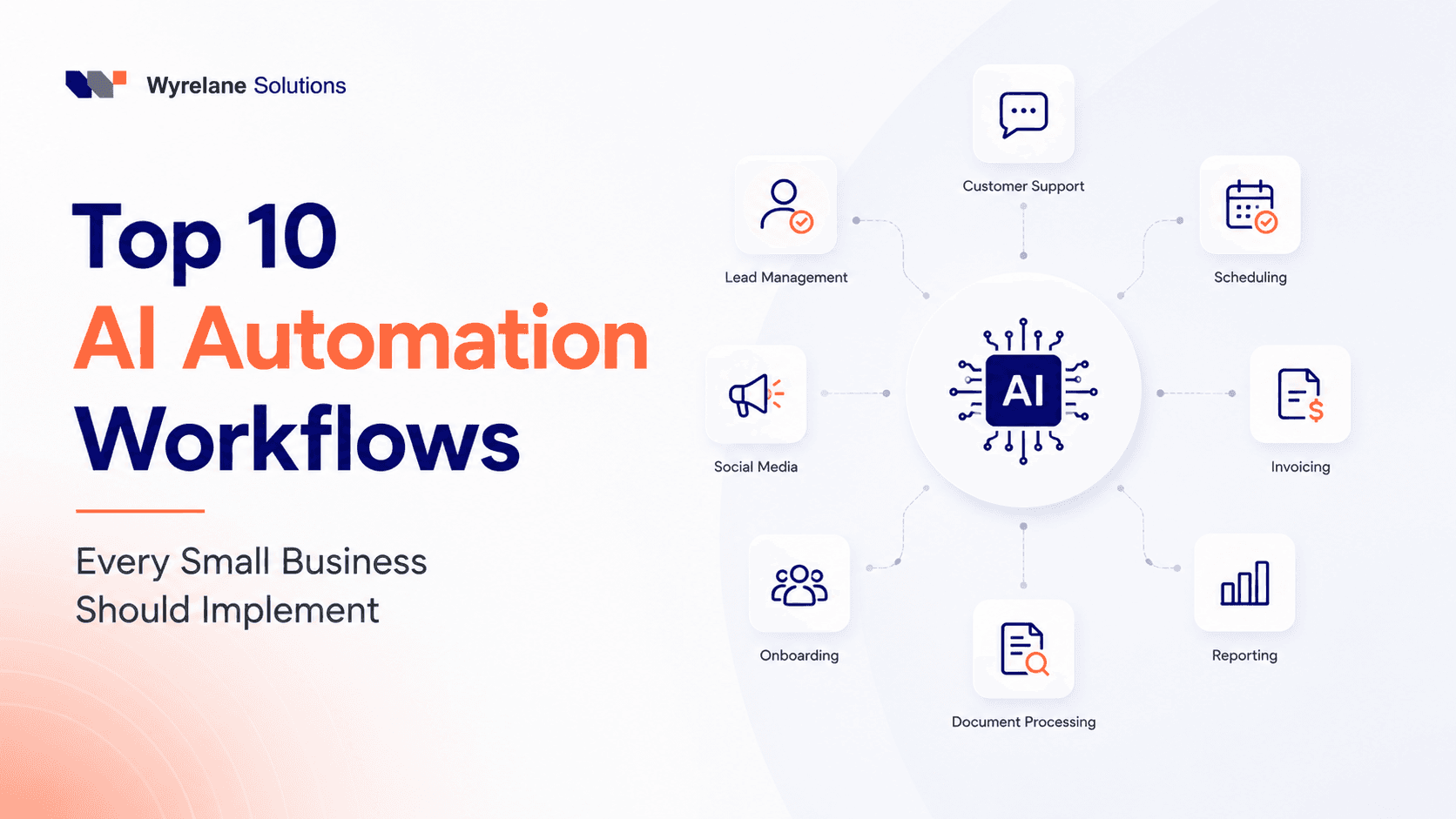
Top 10 AI Automation Workflows Every Small Business Should Implement in 2026
You don't need a dev team or a six-figure budget to put AI to work in your business. Here are the 10 automation workflows small businesses are actually using right now to save hours every week, plus the mistakes that quietly waste all the time savings.